|
Day 1 - Arriving in Paris, we
will check into 4 star Hotel Chateau Frontenac.
We'll then meet together for a cocktail reception hosted by the Comte and Comtesse de Fry,
my aunt and uncle, in their art-filled apartment overlooking the Seine. The reception is
followed by a dinner at the Terre des Truffes restaurant where every dish is
complemented with fresh truffles.
Day 2 - The next day we will depart
for an hour and a half drive to the Champagne
region in rental cars or a minibus. We'll visit the Champagne winery, Pol Rogers, in
Epernay followed by a private lunch at the Chateau Pol Rogers and then explore the town
of Epernay and its environs. We'll then take a short drive to Reims where we'll check
into the Hotel Chateau de la Muire in Reims - l'Assiette Champenoise. The evening will
end with a brasserie in Reims.
Day 3 - On this day, we will visit the city of Reims
including the Notre Dame cathedral, the
Basilica of Saint Remi, the Fine Arts museum and the Le Vergeur House-Museum. Then it's
on to the Mumm Champagne Maison followed by a wine tasting. We'll have lunch at the
Restaurant le Boulingrin in Reims and afterwards, also in Reims, visit the Champagne
Maison Taittinger which will be followed by a tasting. After returning to the Chateau
de la Muire, we'll enjoy some free time before having dinner at l'Assiette Champenoise, a
1 star Michelin restaurant.

Classic Champagne
Champagne is a historic province in northeastern France, and its city of Reims is where
many kings were crowned. The rolling countryside and wide river valleys make this region
one of the most beautiful parts of the country. It has some of the most spectacular scenery
in France; laced with lakes, rivers, canals, forests, parks and vineyards that stretch for miles.
Grapes have been cultivated here for over 2000 years. The production of Champagne is centered
around the cities of Reims, Châlons-en-Champagne and Épernay. The composition of the subsoil,
combined with Champagne's micro-climates, determines the subtle differences between each cru
and influences the characteristics of individual wines. This subsoil extends down hundreds
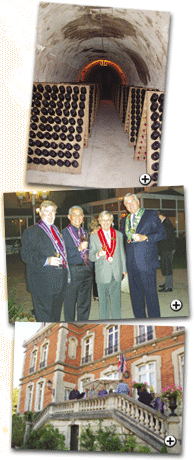
of feet to provide the ideal and spectacular cellars [caves] to store wines at a constant
temperature and humidity. The chalky limestone soil, and caves below, likely contribute to
the Champagne's great taste.
|