For those of you who have seen the Disney movie, Ratatouille, you may have enjoyed (or not) the character that is supposed to probably portray a "Michelin" food critic; kind of stiff, gloomy and with a superior demeanor. In light of the story of this film, it has been a while since I've shared my opinion about what in the United States has been somewhat controversial: the Michelin Restaurant Guide and the attribution of the most sought after and prestigious award: the Michelin stars. The experience I had last July in a two stars restaurant is another good reason for me to bring up this topic. For what should have been a very enjoyable culinary experience, was instead, a disaster. Before I give you more details on this "memorable" evening, I'd like to give you some history about the Red Michelin Guide and the hype that has come to surround it.
The Guide started in 1900 when André Michelin published the first edition of a guide to France to help drivers maintain their cars,
 find decent lodging, and good places to eat while touring. It included addresses of gasoline distributors, garages, tire suppliers, information on fuel prices, changing tires and repairing the cars of the day.
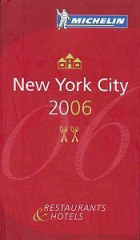
In 1926, the Guide introduced the star to note restaurants and inns that served good cooking; two and three stars were added in the early 1930s. The cover of the guide was originally blue but since 1931 has been red. From then on, the Michelin Red Guide has been a Holy Grail, of sorts, awarding up to three stars. To establish the restaurants' reviews and evaluations, the Guide uses anonymous inspectors and applies a rating system with stars. Most restaurants receive no stars at all; just an inclusion in the book is a seal of approval. One star indicates "interesting", or more precisely a very good restaurant in its category; two stars indicate a place well worth visiting if one is in the vicinity; three stars means "exceptional cuisine," worthy of a special journey.
Today a series of twelve guides lists more than 45,000 hotels and restaurants across Europe and the guide to France, alone, has sold 30 million copies since it was introduced. There are now Red Guides covering France, Austria, Netherlands/Belgium/Luxemburg, Italy, Germany, Spain/Portugal, Switzerland, and the UK/Ireland. The Guide covering France is still by far the most thorough. The first Guides for cities outside of Europe were published in 2005 for New York City and in 2006 for San Francisco.
It is crucial for a restaurant or a chef to not only be listed in the Guide but most importantly to have a star and ultimately three stars, knowing the stars are awarded strictly for cuisine and service. Some restaurateurs that have moved up from two to three stars even say they have seen their businesses grow by 60%. There is no higher accolade in the culinary world than a three-star rating in the Michelin Guide, nor one that so swiftly accrues to "the bottom line." As you can imagine the competition and determination to reach this ultimate reward is fierce and merciless, particularly when you know only a happy few belong to this elite club. Picture these numbers: there are about 10,000 restaurants in France, 3,569 are listed in the Michelin Guide. Among them, 529 have one star (5% of all restaurants), 68 have two stars (0.68%) and only 26 have three stars, and this figure stays quite constant. Usually, to be promoted to two stars, then up to three stars status, one of the three star restaurants has to be demoted.
One of the challenges for three stars restaurants is to keep this ultimate award as long as possible.
 It can create major chaos and even the perspective of losing a star has led a few chefs, such as Bernard Loiseau, to commit suicide. There is so much at stake.
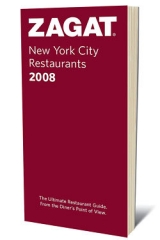
Looking at the United States, since the Guide has been introduced in New York and San Francisco, the long term perspective is promising. Five restaurants have already been award three stars; in New York, the Bernardin, Alain Ducasse, Per Se, Jean George, and the French Laundry in Napa. However since the Michelin Guide is published by a French company, some U.S. food critics have denounced the rating system as inherently biased toward French cuisine. Michelin's expansion to the United States comes as it is struggling to maintain its relevance in a freewheeling global dining scene where restaurants come and go with increasing frequency and the Internet is filled with amateur and professional commentary, much of it very good. Michelin is also running up against the very successful Zagat Survey Guide, founded in 1979 by two Yale-educated lawyers, Tim and Nina Zagat. The major difference between the two guides is that the Zagat establish its ratings based on the opinions of thousands of patrons while the Michelin rating is based on the opinion of one reviewer. Both have their advantages and limitations.
Do you value the opinions of many versus one expert person? I am sure everybody has an opinion on this and I personally have a hard time not to think that to be fully impartial as an individual, would be very challenging. But what is most striking regarding this rating system is how high we set our expectations when we decide to splurge and open our wallet to experience the ultimate meal in a two or three stars restaurant. Knowing that in the entire world you have only 60 three stars and about 180 two stars restaurants, the bar is raised very high. As a result we expect the meal and service to be spectacular and flawless. What does it exactly equate to? All of us have a different sensibility and criteria to assess a dish or quality of service and rarely everybody around the table has a unanimous opinion. Nowadays with the explosion of new restaurants and ambitious, young and innovative chefs, we as patrons have benefited from the eagerness of this new generation of chefs who showcase their culinary talents. I can attest that on numerous occasions I have been amazed by the quality and creativity of dishes served in neighborhood or downtown restaurants. The downside of this display of talents is that when you decide to go to a two or three stars Michelin restaurant, you think you are going to be transported to a "beyond imagination" gastronomical world but very often you end up disappointed by the experience. I think it relates to our level of unrealistic expectations mainly due to the fact we have become more food savvy and have less tolerance when presented with a meal that we know we could have enjoyed in another non-Michelin star restaurant - and for a price that could have been cut by at least a third. Let's face it, the Michelin Stars restaurants are very pricey and it hurts when you feel that the caliber of food or services provided do not meet your standards.
Unfortunately, this is what I experienced with my wife this Summer in a two stars restaurant located in a small village in Provence, Eygalière. As you know what makes a dining experience memorable is the perfect harmony between the quality of service and the food on your plate. If one of these attributes is absent or weak, it impacts everything and suddenly the dining experience becomes a disaster. You stop enjoying yourself and start noticing every detail that is wrong. The conversation then revolves around the flaws, tensions mount and suddenly the charm is lost. It becomes an expensive, disappointing night and in addition, puts you in a horrible mood.
The evening my wife and I experienced was one of very poor service and an unacceptable attitude on the part of the staff. During the entire evening we had this awful feeling we were not welcomed and considered "trouble makers" because among many other incidents, we asked if they could close the separation door as four arrogant and uncivilized persons pulled four huge Havana cigars as big as a child's baseball bat out of their pockets, and started puffing in our faces. This is only one of the numerous incidents we endured in a restaurant that quite frankly does not deserve its two Michelin stars. Following this dinner, I sent a blunt and "spicy" letter to the owners of the restaurant. They responded that it was very unfortunate and they were sorry but they had been understaffed for the last two weeks with two line cooks and the sommelier missing which consequently created a lot of stress that obviously they could not handle properly. I found the explanation rather "weak" and decided to send a letter to the Michelin Guide to share my unfortunate experience with them.
As you can see, the star system is far from flawless. When you realize that an anonymous Michelin
inspector visits most restaurants only every 18 months, it leaves a lot of leeway for deficiencies to occur. Does it mean you should avoid Michelin stars restaurants? Absolutely not! It is a credible reference and I have no doubt that the Red Guide will expand more in the United Sates and become increasingly reliable as they make necessary market and cultural adjustments.
In my next newsletter I will share the response with you that I receive from the Michelin Guide following my complaints. Vive le Guide!
Bertrand
PS: Some of the content of this newsletter are excerpts from an article written by Amy Cortese in the March 2007 issue of the American Magazine. If you would like to know the name of the restaurant in Eygaliere, ask me and I will share it with you.
|